A concrete slab, a sand and cement screed, a set of freshly plastered walls: each one carries a large amount of water into a building. On a dry, breezy summer day some of that evaporates on its own. In a humid coastal build, a closed-up interior or a cold winter, it can sit there for weeks.
That is a scheduling problem. Floor coverings laid on a damp slab can lift, cup, bubble or fail adhesion. Paint over damp plaster can blister. And every week the flooring layer waits is a week the handover moves out.
A construction dehumidifier does not make concrete cure faster, and it cannot shortcut the chemistry. What it does is keep the air around the building materials dry so moisture keeps leaving them at a steady rate, whatever the weather is doing outside.
What each trade is actually trying to solve
| Trade | The problem | Equipment that helps |
|---|---|---|
| Builders and site managers | Closed-up interiors stay humid; trades are held up | LGR dehumidifiers, air movers |
| Flooring installers | Slab or screed above the flooring maker's moisture limit | LGR dehumidifiers, moisture testing |
| Plasterers and painters | Slow-drying set coats, especially in winter | Dehumidifier plus gentle air movement |
| Renovators | Dust drifting into occupied parts of the house | HEPA air scrubbers, negative air |
Drying slabs and screeds before flooring
This is where most builders first reach for a dehumidifier, and it needs care.
Timber, vinyl, hybrid and carpet floor coverings, along with tile and flooring adhesives, all have moisture limits for the substrate they go on. Those limits, and the test method used to check them, are set by the flooring and adhesive manufacturers and relevant Australian standards. Always follow the flooring manufacturer's moisture requirements and test the slab before laying. A dehumidifier helps you get there sooner; it does not replace the test.
Practical approach:
- Close the space. Doors and windows shut, so the dehumidifier works on a defined volume rather than the outdoors.
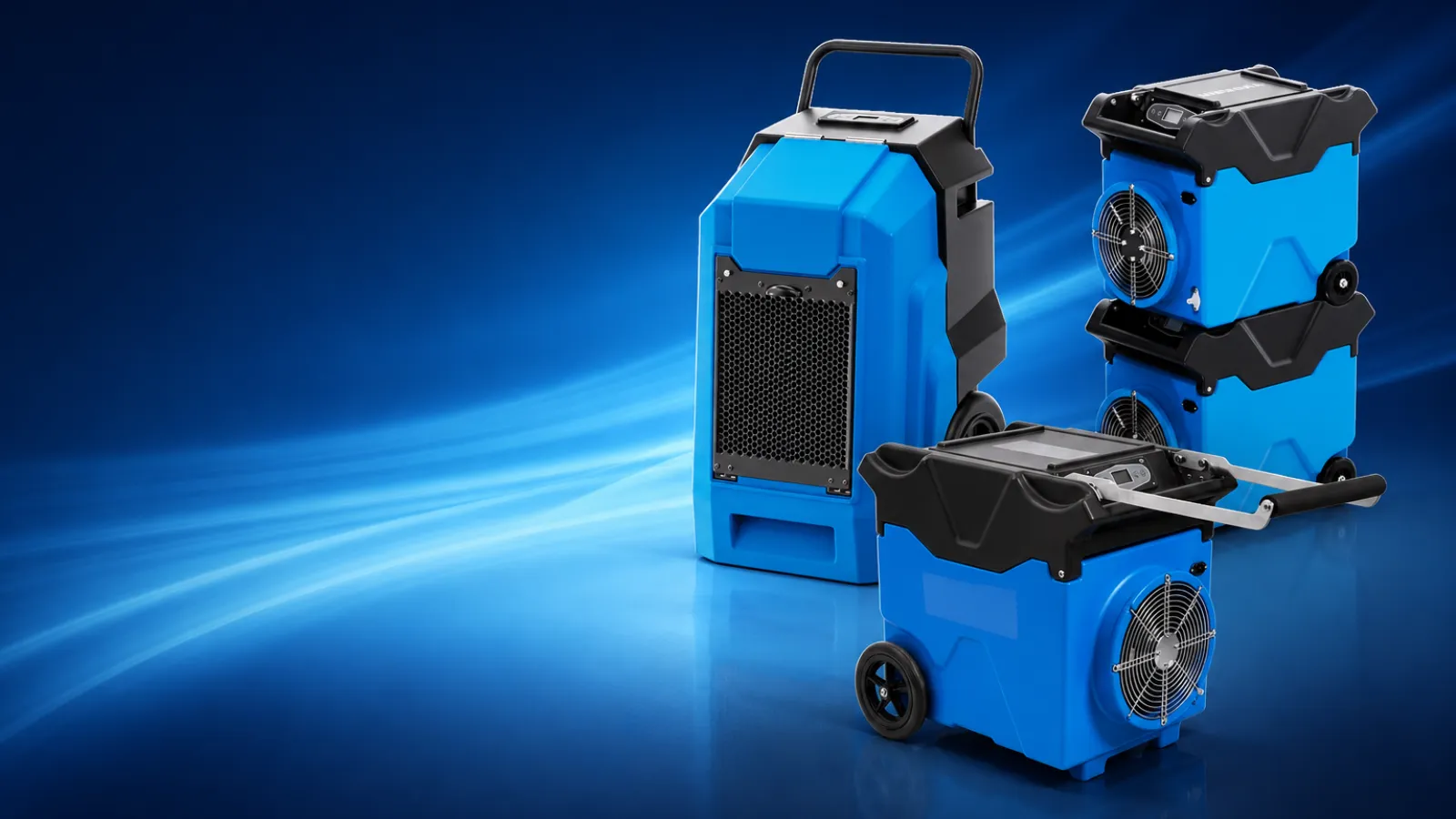
- Run LGR dehumidifiers continuously. An LGR (Low Grain Refrigerant) unit keeps pulling water as the air dries, which matters over a drying period that may run for weeks.
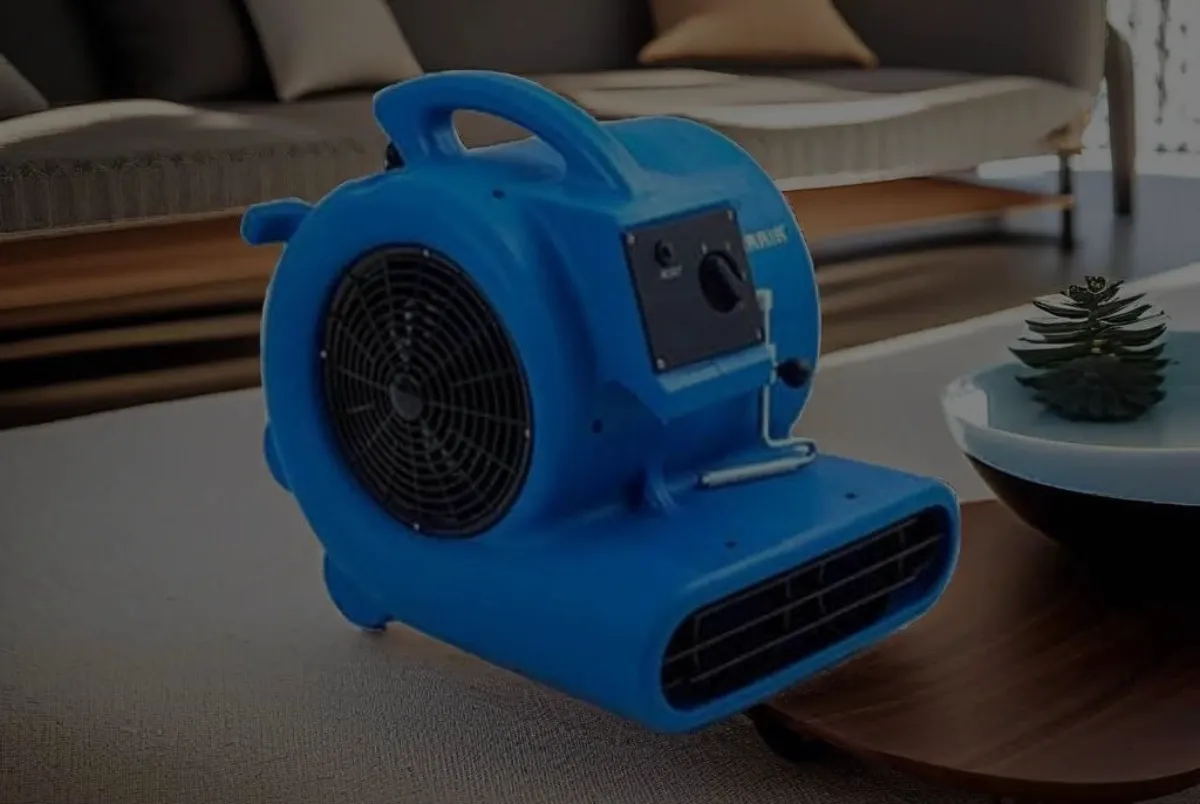
- Add low air movement across the floor. A few Pro Square blowers moving air across the slab surface help, without blasting fresh screed. Square blowers stack for storage, which suits a site container.
- Drain continuously. Run the condensate hose to a floor waste or outside, so the unit never stops on a full tank over a weekend.
- Test, record, repeat. Take readings on a regular schedule and keep the records with the job file.
How long it takes depends on slab thickness, mix, ventilation and climate, so treat any timeframe as a rough guide and follow the readings. Our structural drying time guide explains the variables.
Winter drying down to 2°C
Standard refrigerant dehumidifiers struggle in the cold. As the coil drops towards freezing it ices up and extraction falls away, which is exactly when a Melbourne, Canberra or Hobart winter build needs help.
The Pro LGR 50L is rated to work down to 2°C and has automatic defrost, so it keeps extracting on cold mornings in an unheated shell. For larger open floors, the Pro LGR 90L covers more volume from a single machine. Both are stackable with retractable handles, and every Thorair dehumidifier rolls on wheels, which makes moving them from level to level simpler.
For help choosing capacity, the dehumidifier size calculator is a good starting point.
Dust control on renovation and fit-out work
Cutting, sanding and demolishing plasterboard, concrete and old finishes puts fine dust into the air. In occupied homes, offices and shops it travels quickly.
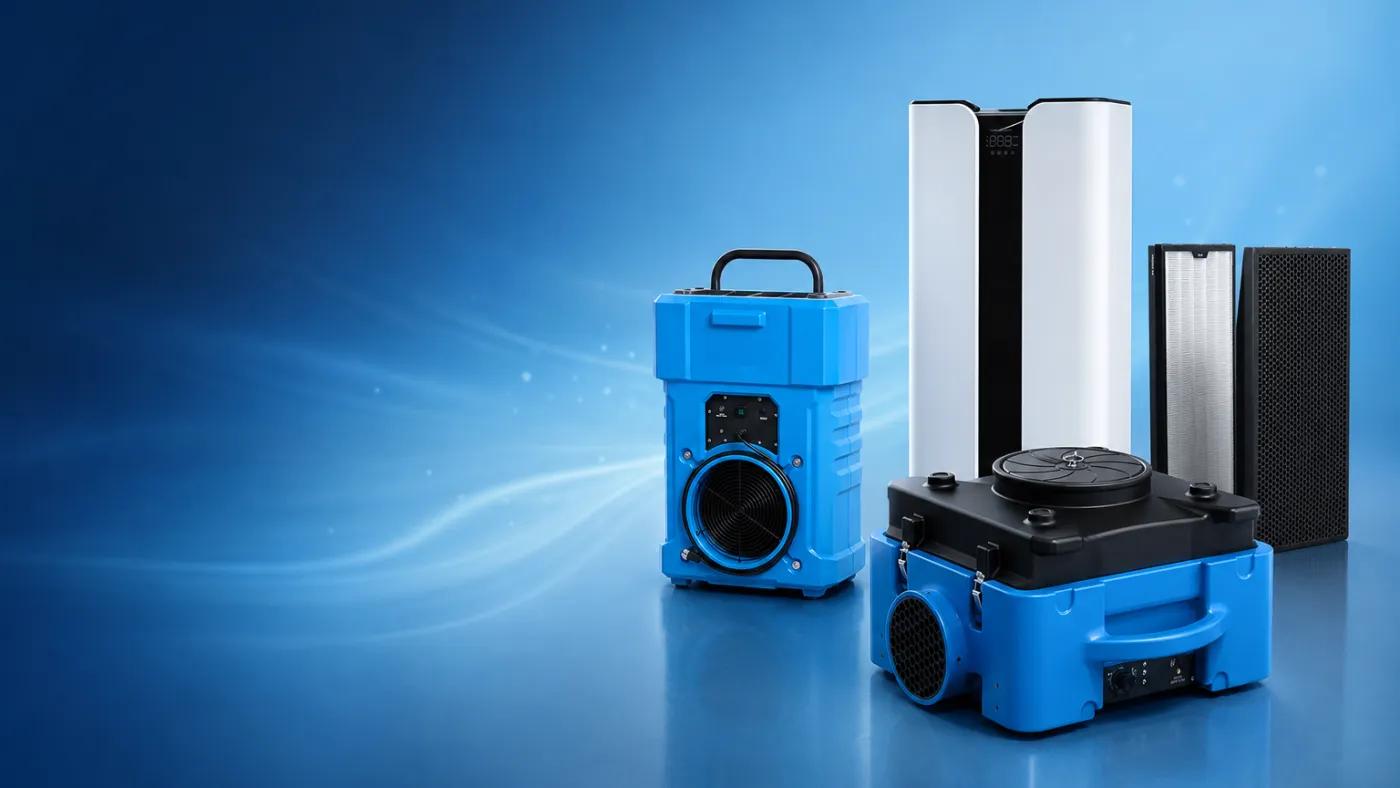
A HEPA air scrubber captures that fine dust before it settles. Set up as negative air, with the exhaust ducted outside a sealed-off work zone, it also keeps dust inside the zone rather than letting it drift through the building.
- The 500 CFM Pro scrubber is compact, stackable and light enough (17.5 kg) to carry through a finished house.
- The Hulk 1000 CFM covers more area and suits open-plan renovations.
- The Hulk 2000 CFM is built for large commercial rooms and busy work zones.
Scrubbers help with dust but do not replace site safety requirements. Where silica dust or asbestos may be present, follow your state's work health and safety requirements and use licensed contractors where required.
Buying for a building business
A builder who owns a few dehumidifiers can put them to work on most jobs: new slabs, winter plastering, wet weather during frame and lock-up, and the occasional leak during construction. Thorair equipment is SAA certified for use on Australian sites, carries a 365-day full replacement warranty, and anyone can buy, with no ABN required. Larger orders can be priced by phone, and finance is available through Emu Money, subject to approval.