Australia's big flood events share a pattern. Brisbane in 2011 and again in 2022, the Townsville monsoon flood of 2019, Lismore and the Northern Rivers in 2022, and the Hawkesbury-Nepean floods of 2021 and 2022 all left thousands of homes and businesses needing to be stripped and dried at once. In the weeks after, drying equipment is in short supply, hire fleets are booked out and restorers are juggling far more jobs than usual.
This page is about preparing for that kind of surge: how much equipment a flood job needs, what limits you on site, and how to decide between buying and hiring.
Floodwater is Category 3
Floodwater that has come over the ground or out of a river or creek is treated as Category 3 under the IICRC S500 standard. It can carry sewage, chemicals, soil and animal waste. That changes the job in three ways:
- Porous materials usually go. Carpet, underlay, plasterboard below the flood line, insulation and particleboard cabinetry are generally removed rather than dried in place.
- Cleaning comes before drying. Silt and contamination are removed and surfaces cleaned and treated before the drying fleet goes in.
- The crew needs proper PPE. At a minimum that means gloves, eye protection, waterproof boots and a suitable respirator. Large or heavily contaminated jobs should be handled by a qualified restoration professional, not a homeowner with a hire fan.
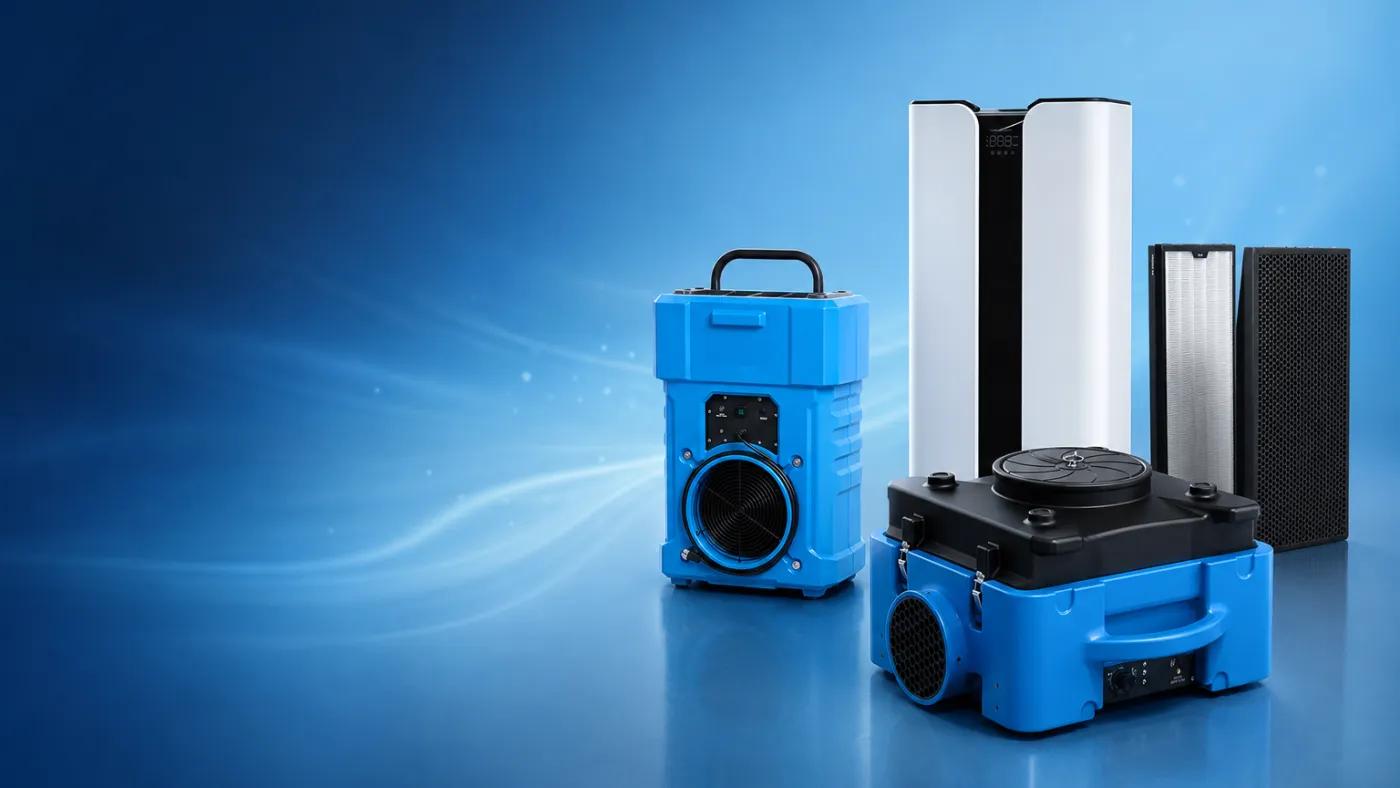
A HEPA air scrubber such as the Hulk 1000 CFM is worth running during strip-out to control dust, spores and odour.
Sizing a flood fleet
After strip-out, a flooded house is mostly exposed frames, slab and the lower sections of walls. The materials left behind are dense and slow to give up water, so these are often Class 3 or Class 4 drying situations. That favours dehumidification capacity over sheer numbers of fans.
A common starting point per flooded single-storey house, once stripped:
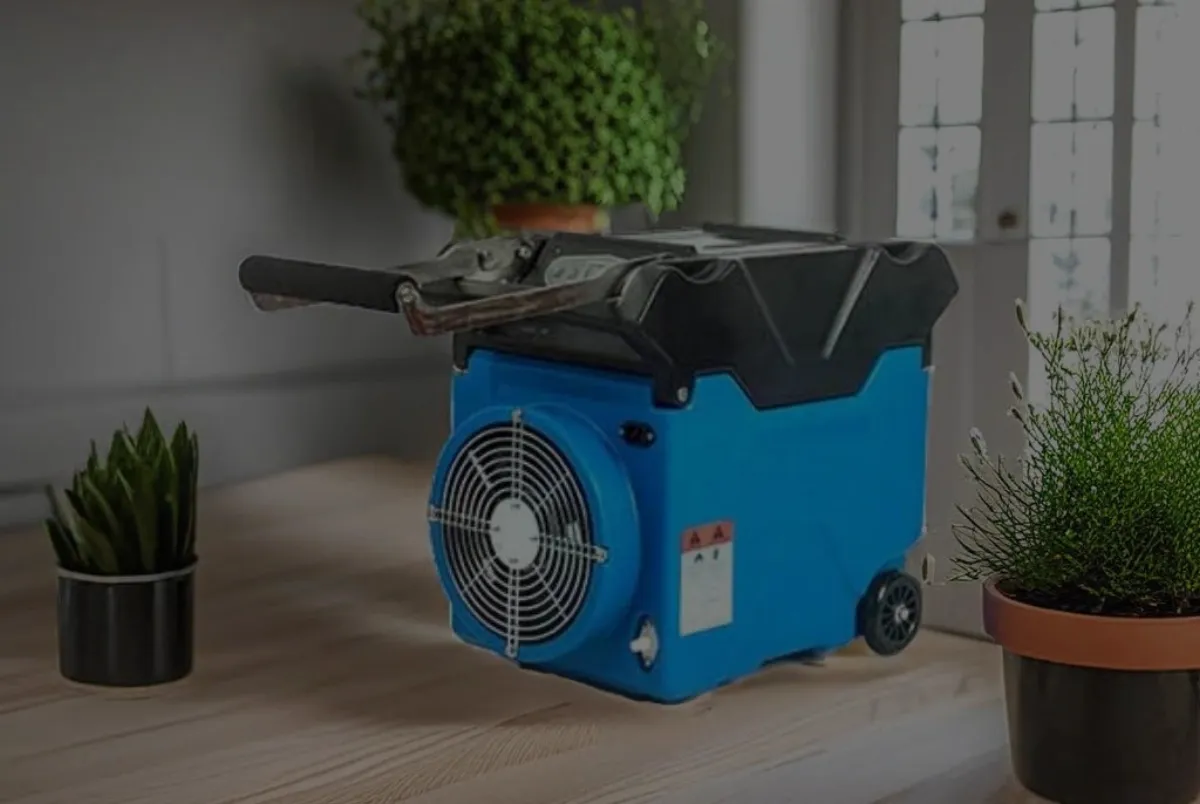
- Dehumidifiers: two to four LGR units, weighted towards 70L and 90L machines for open areas, with 50L units for bathrooms and small rooms.
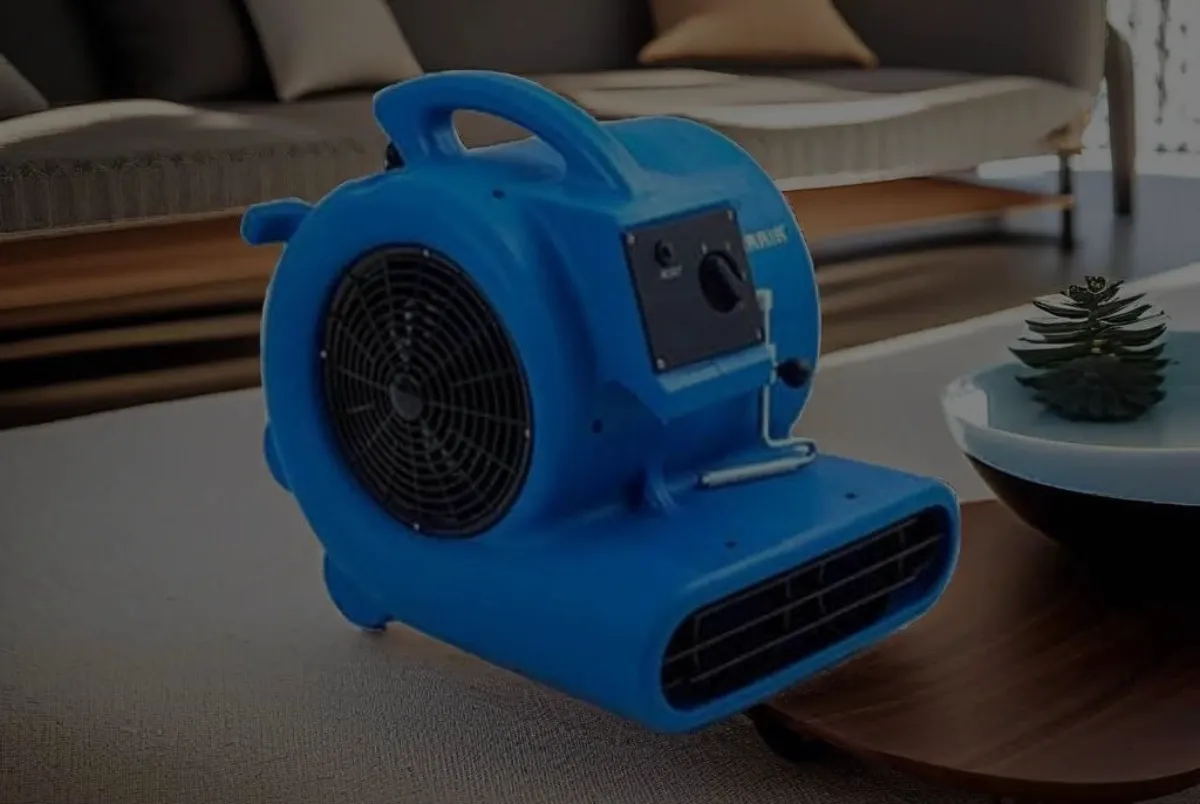
- Air movers: enough to run air along every wet wall base and across exposed slab, often 10–20 per house.
- Air scrubbers: one or two during demolition and cleaning.
Multiply that by the number of jobs you expect to run at once and the fleet grows quickly. A business planning to hold ten houses in drying at the same time is looking at dozens of dehumidifiers and well over a hundred air movers. Treat these numbers as rules of thumb and let daily moisture readings decide when machines can come off one job and go to the next. The dehumidifier size calculator and air mover calculator help with individual rooms.
Power is the real constraint
In a flood zone, power is often the first thing you run out of. Switchboards may have been underwater and need an electrician's sign-off before use, and a standard domestic circuit can only carry so much load before it trips.
Practical steps:
- Check current draw before you set up. Look at the amps on each machine's plate and spread units across circuits. The 500 CFM Pro scrubber draws a maximum of 1.5 A; the Hulk 1000 draws 3.0 A. Air movers and dehumidifiers vary, so add them up per circuit.
- Favour efficient units. An LGR dehumidifier that keeps removing water as humidity falls gets more done per amp than running extra machines.
- Plan for generators on sites without mains. Make sure generator output is adequate and that leads and connections are rated for outdoor use.
- Use a licensed electrician for anything involving flood-affected switchboards.
Working with insurers and assessors
Most flood restoration work in Australia is paid for through insurance, and assessors want evidence. In general terms that means moisture readings at the start, daily readings through the job, photos and thermal images showing affected areas, and an equipment log showing what ran where and for how long. A combined tool such as the FLIR MR277 makes it easier to capture readings and images together. Policies, scopes and approvals vary by insurer, so confirm requirements on each claim.
Buying vs hiring
Hiring makes sense for a one-off job. It becomes harder to rely on during a declared flood event, when everyone is chasing the same machines.
Buying suits restorers who:
- respond to storm and flood events more than occasionally
- have been caught short of equipment in past surges
- want machines they know are serviced and working
- are building capacity to take on more insurance work
Thorair ships Australia-wide from its Currumbin Waters warehouse, with same-day dispatch on orders placed before 2:00pm AEST; WA and Tasmania attract a freight surcharge. Stock and freight timing during a major event can be affected like any supplier's, so building your fleet before the wet season is the safer plan. Bulk pricing is available on larger orders by phone on 1300 263 551, and finance through Emu Money can spread the cost, subject to approval. The equipment packages, including the Fleet Kit and Pro Packages, bundle dehumidifiers, air movers and scrubbers for exactly this kind of scale-up.