A burst flexi hose, a failed hot water system, a roof leak after a summer storm. The source changes but the problem does not: water has soaked into carpet, underlay, plasterboard, timber and sometimes concrete, and it needs to come out before it causes swelling, delamination or mould.
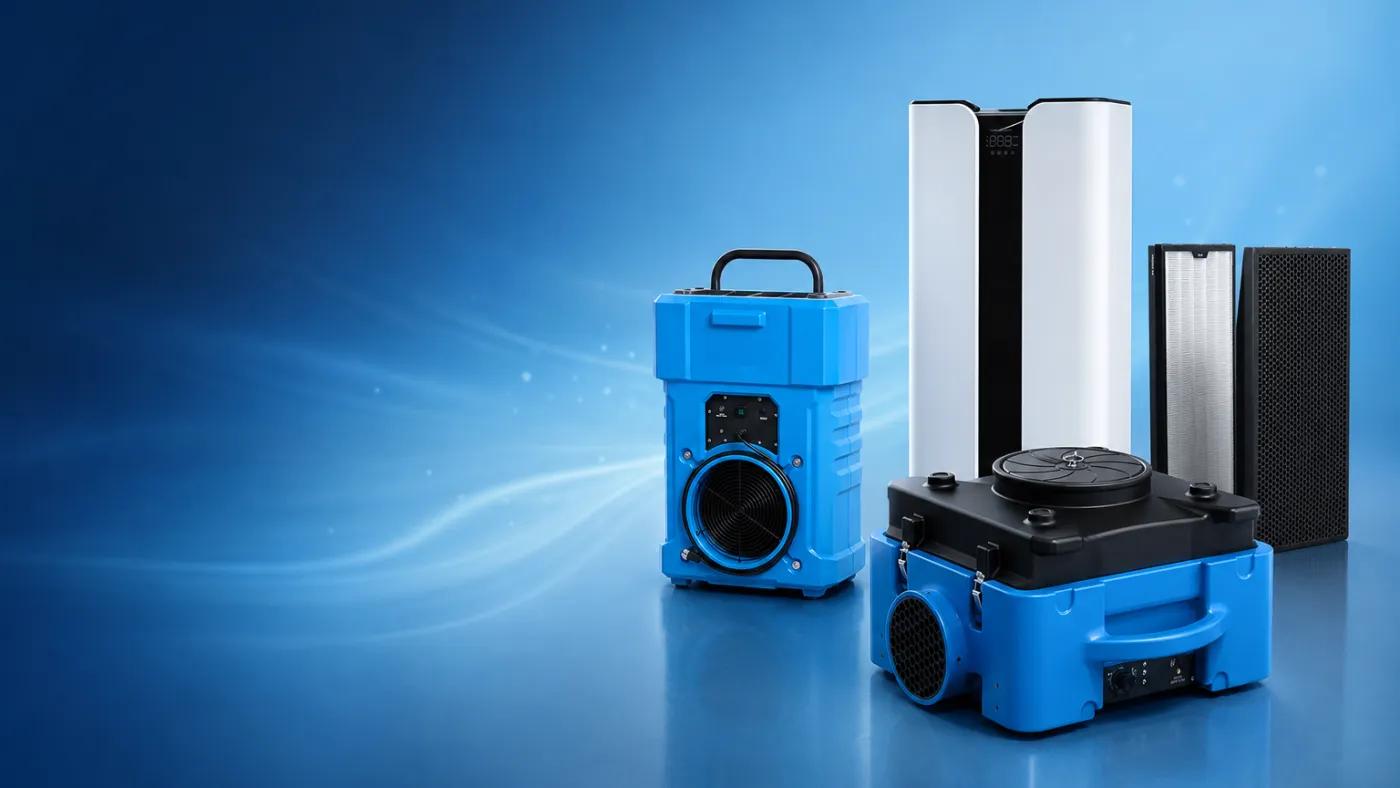
Water damage restoration equipment falls into three groups, and a job goes wrong when any one of them is missing or undersized.
Start by classifying the water
Before you set a single machine, work out what kind of water you are dealing with. The IICRC S500 standard, widely used by Australian restorers, sorts water two ways.
Category describes contamination:
- Category 1 – clean water from a sanitary source, such as a burst supply line.
- Category 2 – water with significant contamination, such as dishwasher or washing machine overflow.
- Category 3 – grossly contaminated water, including sewage and floodwater from rivers or overland flow.
Category matters because it decides what can be dried in place and what must be removed. Clean-water carpet can often be dried and kept. Category 3 materials that are porous are generally removed, and the crew needs proper PPE. Water also gets worse with time and warmth, so a Category 1 leak left for days may no longer be Category 1.
Class describes how much evaporation work there is, from Class 1 (a small area, little absorbed moisture) up to Class 4 (dense materials such as hardwood, plaster or concrete holding bound water). Higher classes need more dehumidification and more time, not just more fans.
The three equipment groups
1. Detection
You cannot dry what you cannot see. A moisture meter tells you how wet a material is; a thermal camera shows you where to look by picking up the cooler patches that evaporating moisture creates behind walls and under floors. Together they set the job boundary on day one and prove the job is dry on the last day.
The FLIR MR277 combines a thermal imager and a moisture meter in one tool. If you already own a meter, a standalone thermal camera covers the imaging side. Our guide to thermal cameras and moisture meters explains how the two work together.
2. Air movers
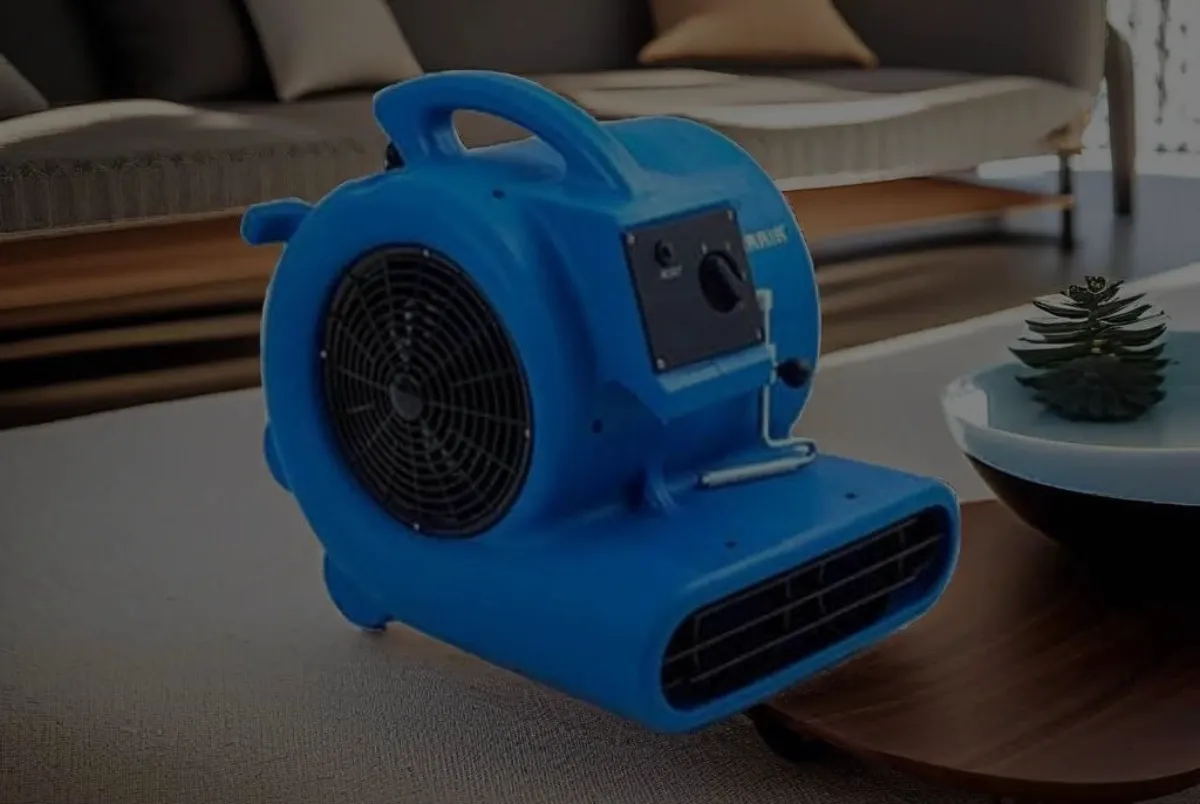
Air movers push a fast, low layer of air across wet surfaces. This breaks up the damp boundary layer sitting on carpet or plasterboard and speeds up evaporation. Snail blowers such as the Thorair Pro Snail are the standard choice for carpet and wall bases. Square blowers stack for storage and suit general room drying.
3. Dehumidifiers
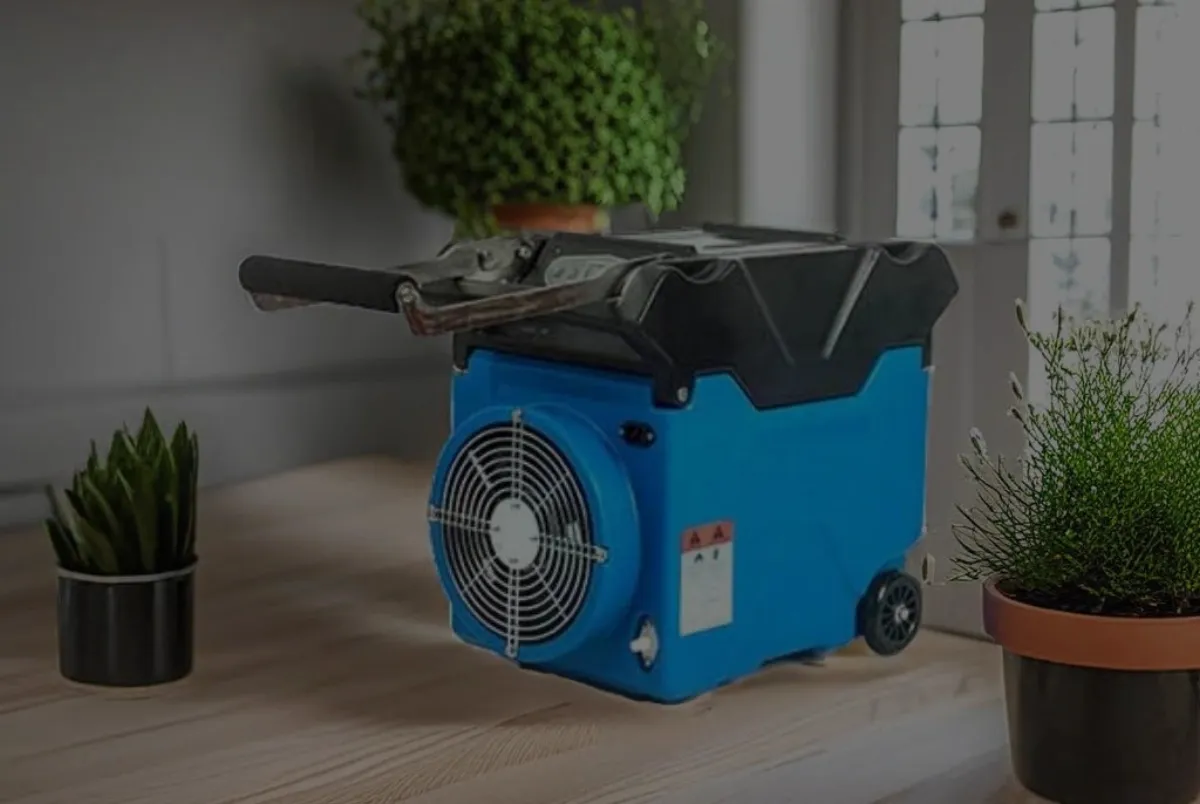
Air movers put moisture into the air. A dehumidifier takes it out. Without one, humidity climbs, evaporation slows and moisture migrates into dry materials. LGR (Low Grain Refrigerant) dehumidifiers are built to keep pulling water when the air is already fairly dry, which is where standard refrigerant units stall near the end of a job. See LGR vs refrigerant vs desiccant for the detail.
Kit per job size
These are common starting points, not rules. Adjust by class of water, materials, room shape and weather, and always let your moisture readings decide when to add, move or pull equipment.
| Job | Typical scenario | Dehumidifiers | Air movers | Detection |
|---|---|---|---|---|
| Small | One bathroom and hallway, clean water | 1 × 50L LGR | 2–4 | Meter + camera |
| Medium | Two or three rooms, carpet and wall bases wet | 1 × 90L or 2 × 50L LGR | 6–10 | Meter + camera |
| Large | Most of a house or a small office | 2–4 LGR units (mix of 70L and 90L) | 12–20+ | Meter + camera, daily logs |
A widely used rule of thumb for air movers is one per wet wall section plus extra for wet floor area; our air mover calculator and dehumidifier size calculator turn room dimensions into a sensible first set-up.
Which Thorair machines fit
- Pro LGR 50L – the workhorse for single rooms and a sensible unit to buy in numbers. At 35 kg it is easy to carry up stairs, it stacks for transport, and it keeps working down to 2°C.
- Thorair 70L LGR – a middle step for larger open-plan rooms, with a humidistat and timer.
- Pro LGR 90L – the choice when one machine needs to cover a big space or a heavy Class 3 load.
- Pro Snail and Pro Square blowers – snail for carpet and wall bases, square where you want stackable, lower-draw units.
If you are building a fleet from scratch, the equipment packages bundle dehumidifiers, air movers and scrubbers at set quantities. Every Thorair dehumidifier sits on wheels, is SAA certified and is covered by a 365-day full replacement warranty.
Setting up the room
Close the drying area off from the rest of the building so the dehumidifier is working on a defined volume of air. Lift and remove anything that cannot be saved, float or remove underlay depending on category, and angle air movers so the airflow runs along the wall base in one direction around the room. Run the condensate hose to a drain so the machine never stops on a full tank.
Then take readings every day. Drying is finished when materials reach their dry standard, which you establish by reading an unaffected area of the same material. How long that takes depends on the job; see how long structural drying takes.