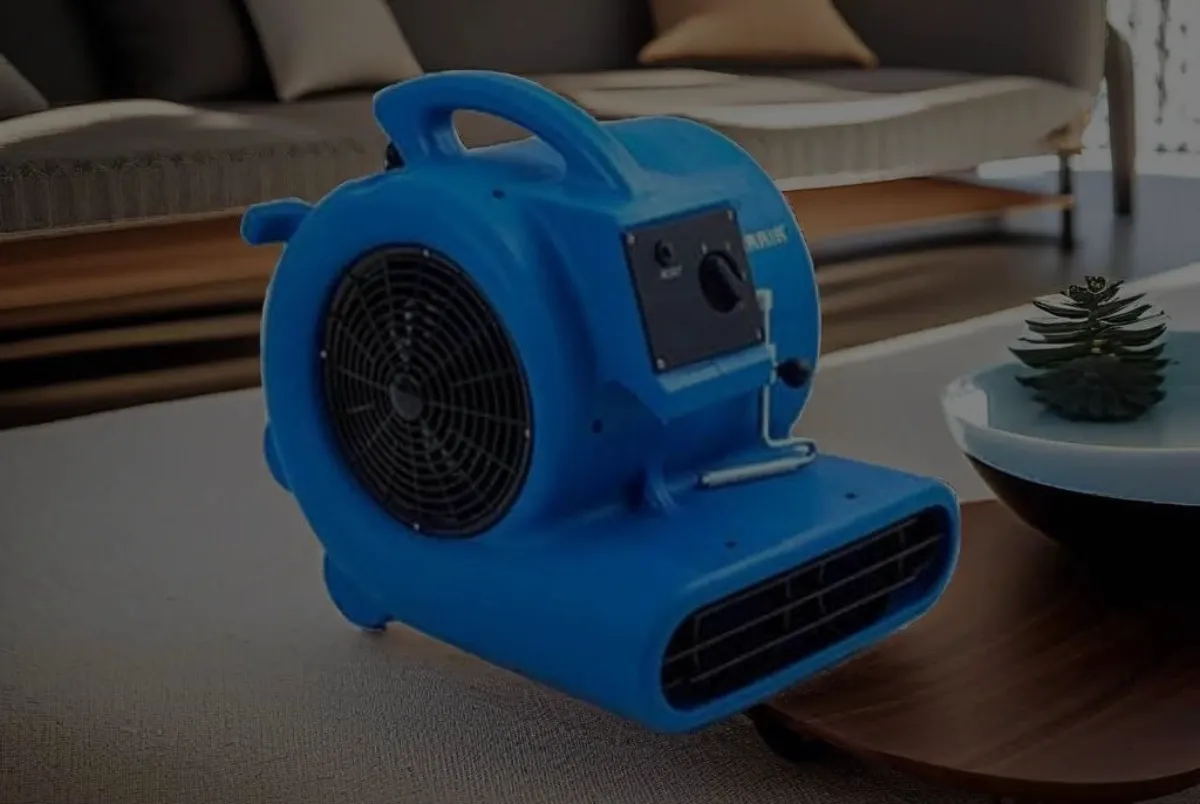
Air movers do one job: they push dry air across wet surfaces so the moisture at the surface evaporates faster. Too few and the boundary layer of damp air sits on the carpet and plasterboard. Too many and you waste power, trip circuits and overload the dehumidifier with more water vapour than it can pull out. The right number sits somewhere in between, and it changes as the job dries.
Start with what is actually wet
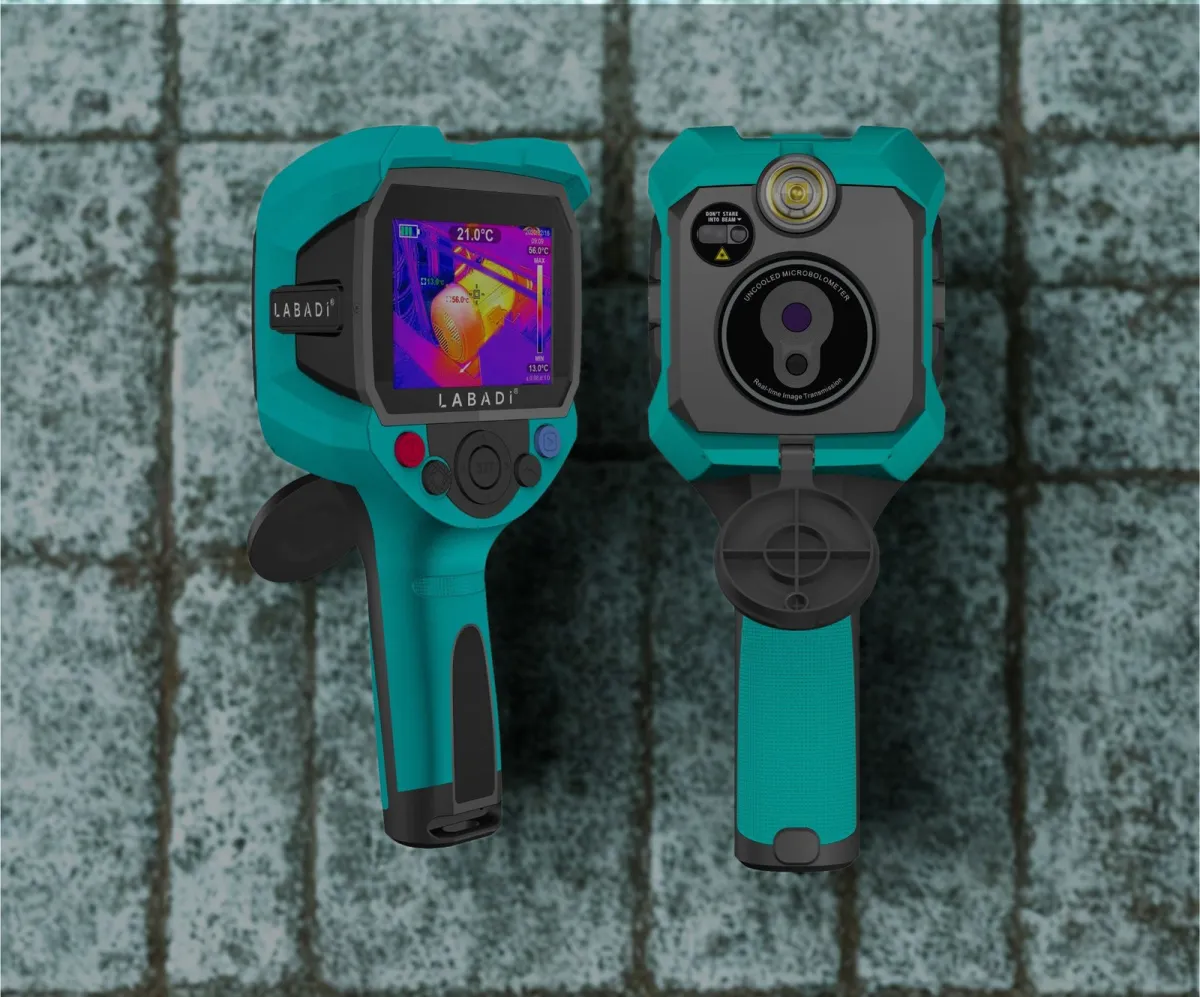
Before counting units, map the wet area. Use a moisture meter and, if you have one, a thermal camera to find the edges of the damage. You need three measurements for each room:
- Wet floor area in square metres (carpet, underlay, timber or tiles over a wet subfloor).
- Wet wall length in linear metres, and how high the wicking has climbed.
- Insets and offsets: alcoves, wardrobes, bay windows, kitchen kickboards, bath hobs and hallways that break up straight wall runs.
Common rules of thumb
Several rules of thumb circulate in industry training. They vary by source and have changed over the years, so treat them as a way to get a first number on the truck, not as a specification. A common starting point is:
- Wall-based: one air mover for roughly every 3–5 linear metres of wet wall.
- Floor-based: one air mover per affected room, plus one for roughly every 5–7 m² of wet floor.
- Walls and ceilings above the floor line: add one for roughly every 9–14 m² of wet wall or ceiling surface that has wicked well above skirting height.
- Insets and offsets: add one for each inset or offset deeper than about 45 cm that the main airflow will not reach.
Run both the wall and floor methods and compare. If they disagree by a lot, the room shape is usually the reason: long narrow hallways favour the wall count, open living areas favour the floor count.
A worked example
Take a 4 m × 3.5 m bedroom with fully wet carpet (14 m²), water wicked about 40 cm up two walls (7.5 m of wet wall), and a built-in robe.
- Wall method: 7.5 m ÷ 3–5 m gives two units.
- Floor method: one for the room, plus 14 m² ÷ 5–7 m² gives two to three more, so three to four units.
- The robe is an inset the main airflow will not reach, so add one.
A sensible starting point is three or four air movers, plus one aimed into the robe. From there, your readings decide what happens next.
Placement matters as much as the count
Three well-placed blowers will often outdry four badly placed ones.
- Angle to the wall. Point snail blowers so the airflow hits the base of the wall at a shallow angle, commonly somewhere around 15–45 degrees, with the outlet close to the skirting. The air should sweep along the wall, not hit it head-on.
- Work in one direction. Set units around the room so they all push air the same way, clockwise or anticlockwise. This builds a circular airflow that keeps moving along every wet wall instead of creating dead spots where two streams collide.
- Floating carpet. When the carpet has been lifted off the tack strip for in-place drying, direct a blower under the edge so the air "floats" the carpet and moves across both the underlay and the back of the carpet.
- Keep dehumidifiers clear. Do not blow straight into a dehumidifier's intake or exhaust. Place the dehumidifier where it can draw in the humid air coming off the wet surfaces, not the dry air it has just exhausted.
- Low spaces. A low-profile unit such as the Pro HEPA Turtle carpet blower is useful under benches, beds and in tight hallways. A downdraft axial blower spreads air in a full circle, which suits open hard floors.
If you are choosing between blower styles, our air mover types guide explains where snail, square, low-profile and axial units each fit.
Don't overload the circuits
Air movers trip more breakers than any other drying equipment because you run so many. Work out the current draw first:
- Current (amps) is roughly power (watts) ÷ voltage. At 240 V, a 550 W unit such as the Pro Snail blower on high draws roughly 2.3 A by that calculation. The Pro Square blower is rated at about 0.7 A on high.
- A standard Australian power point is rated at 10 A, and several power points usually share one circuit, which is protected by a single breaker. Plugging four snail blowers into two outlets on the same circuit can add up quickly once a dehumidifier joins them.
- Check the rating plate on every unit, including the start-up draw of dehumidifier compressors, and spread the load across different circuits. Tell the client which outlets are in use.
- Avoid daisy-chained power boards, keep leads out of standing water and make sure every lead and unit is tested and tagged.
If the building's switchboard is damaged or wet, do not guess. Get an electrician to clear it before energising anything.
Balance air movement with dehumidification
Air movers put water into the air. Dehumidifiers take it out. If the evaporation rate outruns the dehumidifier's capacity, relative humidity climbs, the air stops accepting more moisture and drying stalls.
- Log temperature and relative humidity inside the drying area and outside it at least daily. If the grain depression (the difference in moisture content between the air entering the dehumidifier and the air leaving it) is shrinking, you probably need more dehumidification, not more air.
- A higher-capacity LGR dehumidifier will support more air movers than a small conventional unit. Our dehumidifier size guide covers sizing in detail.
- Reduce air movers as surfaces dry. When carpet and the lower walls reach their dry standard but the subfloor is still wet, move units to where the moisture actually is.
Let readings drive the changes
Whatever number you start with, follow the moisture readings, not a timetable. Take readings at the same marked points each visit, compare them with an unaffected area of the same material, and adjust the layout accordingly. Our air mover calculator gives you a quick starting estimate from room dimensions and wet areas, which you can then refine on site.
For Category 3 (sewage or grossly contaminated) water, remove affected porous materials and control airborne contamination before you start moving air around. That work calls for proper PPE and, on larger jobs, a qualified professional.